


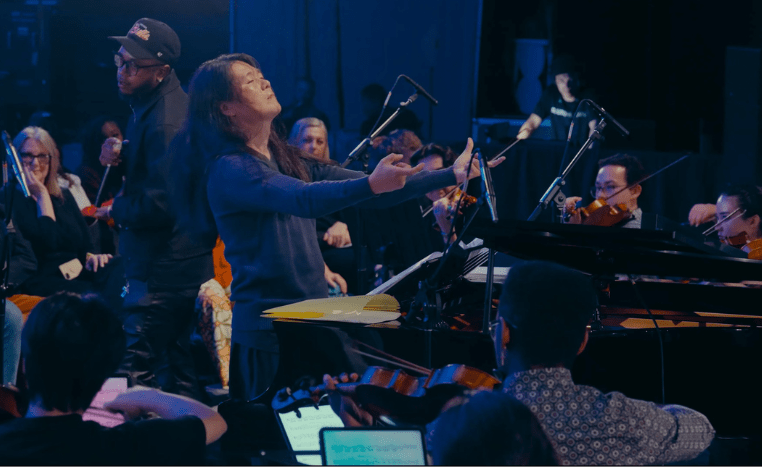
Hip-hop and classical music do not innately seem like two things that belong together. One is modern and raw; the other is steeped in tradition, often perceived as grand music for elites. But The Hip-Hop Orchestra Experience (THHOE) has taken both as inspiration to create something new.
It all started with artistic director JooWan Kim, and it was essentially an exercise to tick off his professors. As he explains, toward the end of his bachelor’s degree, JooWan wanted to move away from what he called “so-called concert music aesthetics,” which felt alienating. He rejected the idea that academic composers must invent new musical languages that the public would then be expected to adapt to, “as if it’s some sort of top-down central planning.”
As his academic experience continued, JooWan grew increasingly dissatisfied. To push back, he wrote a piece that began like a traditional chamber work, using what’s known as a Pierrot Lunaire-style ensemble (flute, woodwinds, piano, percussion, and singer), then added a rapper and a drum set. That experiment, he says, became “the whole process of what we do.”
The response from faculty was predictable. “As expected, they hated it. But that’s what I was going for.” The real surprise came from the audience. A local newspaper covered the performance, and there was clamoring for more. JooWan realized there was something here worth developing.
What began as, in his words, giving “the middle finger to concert music” soon became a serious study of hip-hop itself. He immersed himself in listening, treating hip-hop like contemporary repertoire. A turning point came when he encountered N.W.A., an experience he describes as transformative. Through that, he began to recognize parallels between compositional study and the structures underlying hip-hop (both rooted in systems, architecture, and form) but driven by a core value he saw as central to hip-hop: freedom.
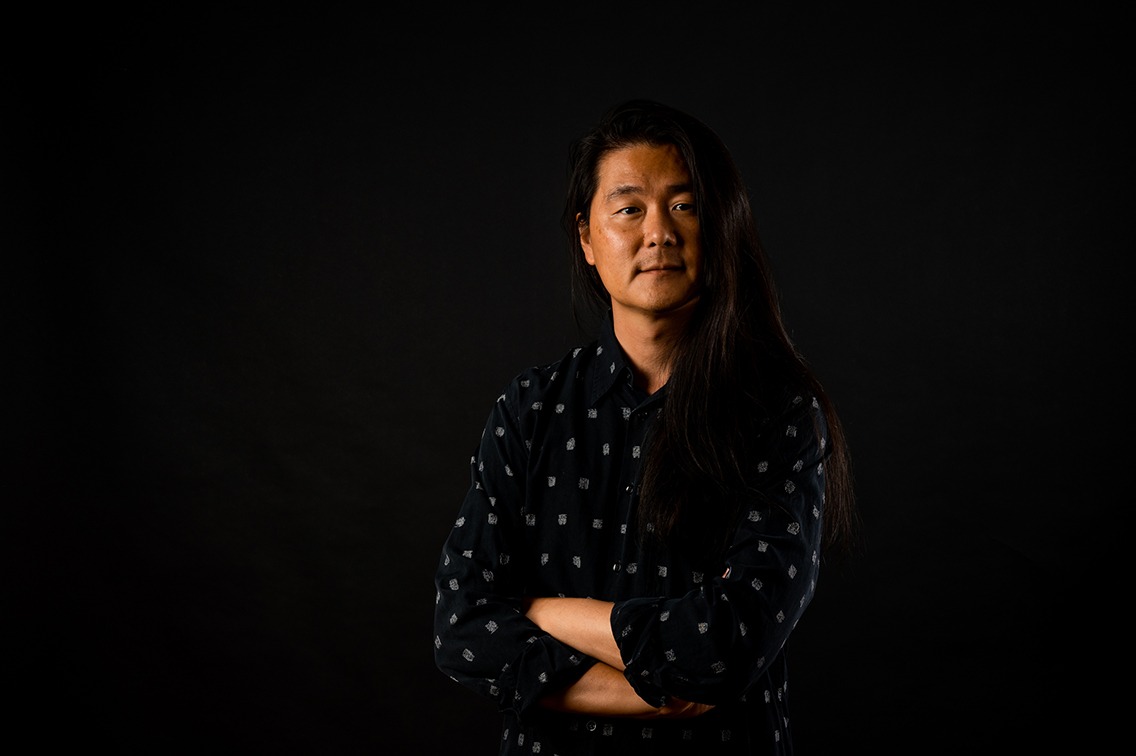
As a native Korean, both the English language and American culture were new to JooWan, yet he came to understand the genre’s cultural weight and its activism around issues like police brutality. “I felt like the kind of audacity, the kind of courage, was inherently connected to what made it work. So in other words, there has to be this kind of strong desire to express something, and then once you do it, the structure will happen. It will follow. I think Stravinsky said something similar, where you actually have a river first, which is music, and then the shape of the river is what we study as forms.”
Looking to composers like Wagner, Debussy, and Gershwin, JooWan sees a history of artists drawing inspiration not to make carbon copies, but to create new musical languages. Gershwin, he notes, didn’t try to exactly imitate jazz with orchestral forms. Instead, he absorbed its harmonic language and produced something else entirely. “Once you do that, you don’t actually create the exact thing that you’re trying to recreate. You create something else. So that’s a process that we call Method Sampling.” JooWan applies that same idea to his own work. With no background in hip-hop culture and armed only with classical techniques like counterpoint and orchestration, what resulted was a new musical style altogether.
Fascinated by the concept and its potential, JooWan continued composing. Early works, like much classical music, were long. Alongside his longtime collaborator and THHOE executive director, Christopher Nicholas, it was reshaped for modern audiences. They swapped opera singers for MCs and cut down the composition’s length. Audience feedback also became central. They would test pieces live, then revise them based on reactions. As JooWan puts it, he’s flexible, “not like an artist type” who refuses to change.
Creating a new audience that brings together fans of both classical music and hip-hop has been a welcome outcome, though not something they set out to engineer. The casual performance style and fresh sound helped create an atmosphere where music feels accessible and powerful.
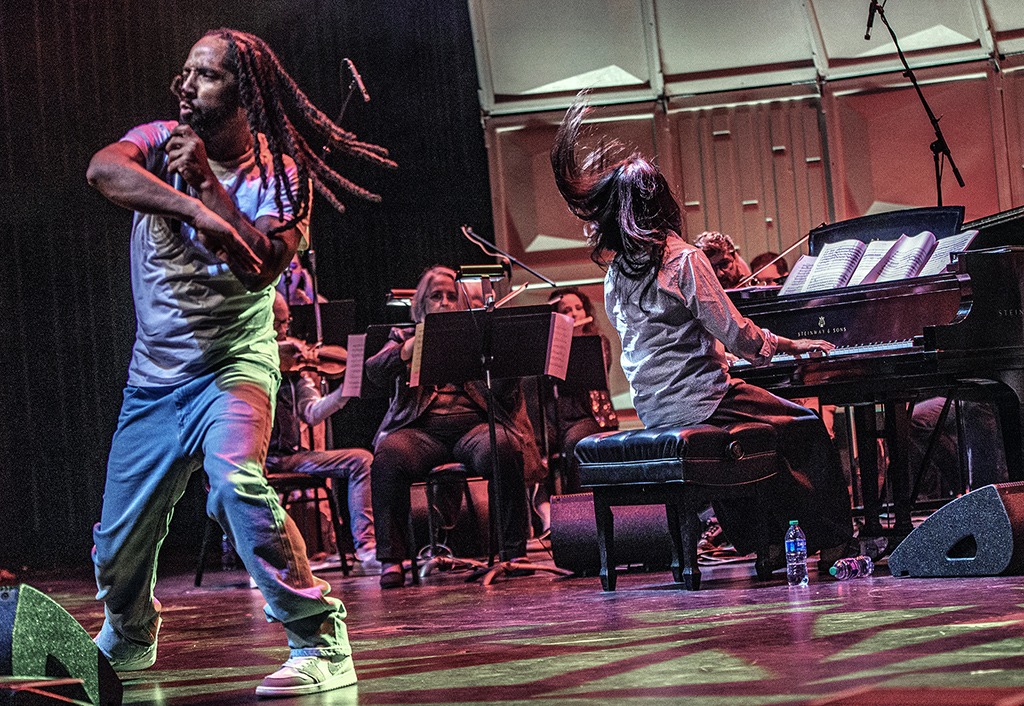
THHOE rejects musical “mannerisms,” favoring instead what JooWan calls methods, “essentially, a portion of principle or even more simply, you could say pieces of technology.” In his view, culture grows out of technology, shaped by history and the people who practice it. To illustrate, he compares kimchi and sauerkraut: different expressions, but the same underlying method of fermentation. “For us, the idea is how to actually get out of this decadence. And by decadence, we mean how everything seems to be repeating without any kind of new development.” They aim to break the cycle. “We think that Method Sampling is one of the big ways to do that.”
The methods and journey of The Hip-Hop Orchestra Experience have been captured in documentaries, including Voice of America’s “Method Sampling: How to Build the Future Together” and PBS’s “The Hip-Hop Orchestra Experience.” They are now set for their world SVOD premiere via Marquee TV and Amazon Prime in Q2 2026, reaching over 50 million households with additional linear broadcast across Central & Eastern Europe and Greece.
So what’s next? JooWan envisions a hip-hop opera in animated form, “Ideally, it will be anime, because I love Japanese anime.”The story centers on the end of the current world and the beginning of a new one. “There’s a lot of action in it. There’s a lot of nudity and violence, a lot of the things that Americans will love.” The music is already written: about two hours’ worth, now being revised and orchestrated for full symphony orchestra and choir.
Stream the new PBS special free online now: https://www.thirteen.org/programs/all-arts-documentary-selects/hip-hop-orchestra-pztcwk/
Watch Voice of America Documentary: https://tubitv.com/movies/100010268/method-sampling-how-to-build-the-future-together?startPos=0
And continue to follow The Hip-Hop Orchestra Experience at:
https://www.ensemblemiknawooj.com/