


Layla Minoui’s new album Journey to Rebirth invites listeners to set aside life’s busyness for a little while and take a cathartic journey back to discover their true selves.
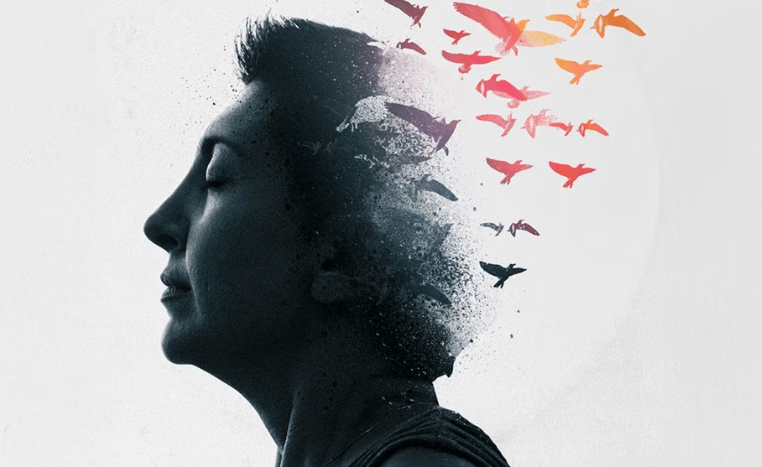
When you speak to Layla, there is a sense of calm – a woman who is at peace with herself. From the very beginning, music has been part of that grounding. “One of my very first memories of music is honestly sitting on my dad’s lap, listening to Dark Side of the Moon by Pink Floyd for the first time, and just being entranced by music, just everything about the journey that it takes you on. I was so mesmerized by the feelings that I had from such a young age.”
Music continued to be a compass and a means of connection; she tells us she has “never been able to fully experience anywhere else.” Layla began learning piano at age 10, and it brought a “deep sense of belonging.” It was a feeling she very much needed. “I was born in Michigan, and my parents had just recently come to the States [from Iran], and so I was very much pulled from one sense of identity to the other. Music was the first time that I really felt connected to myself.” Music provided a language that allowed her to “ speak authentically… and that connective feeling is what led me in this direction, and what led me into really getting immersed in film music and the ways in which music can tell a story.”
Musically, her exposure to Eastern and Western music provided a wide sound palette from the beginning. This, followed by formal training in orchestration and writing for various instruments, gave her the tools to expand her storytelling. “It just continued to expand this language that initially was very innate and natural, but then was like, Well, what can we add? How else can we communicate this feeling through these different combinations of instruments and so forth?”
Layla has composed for a variety of film and television projects, including the Disney animation series Vampirina, the Netflix series Ridley Jones, Bravo’s Girlfriend’s Guide to Divorce, Fox’s Lie to Me, Disney Channel’s original movie Girl vs. Monster, and more. Her experience scoring Pixar’s short To Gerard remains one of her favorites. “The music really carries a lot of the emotion in the story because there isn’t a lot of dialogue.” The soundtrack was recorded at Abbey Road with a full orchestra. “I remember pushing myself beyond what I was used to from my own experience and just exploring what combinations of sounds could work together – using a marimba for the main character’s instrument, the motif. There was just so much room to explore!”
However, amid professional success, life took an abrupt turn. Journey to Rebirth captures the journey and this new chapter. It all culminated around the pandemic, “navigating motherhood” after the birth of her son, then a divorce, and then one month later, a cancer diagnosis. “It was like boom, boom, boom, and so I was in a state of freeze, and music was the thing that was able to, in a way, like thaw me.”
Instead of composing, she calls it simply “expressing” herself at the piano. “It allowed me to process things that felt so heavy.” When composing for a soundtrack, she was bound to a director’s vision or a character’s development, but creating music for its own catharsis felt different. “I spent 18 years telling other people’s stories, and this was the first time that I really dove into my own story.” This time the creation felt “so natural, so raw, that came through without control, without guiding it. If anything, the music was guiding me, and it became a catalyst for allowing me to feel so much that was blocked emotionally in my body, and it became a very therapeutic experience.”
She says that the music helped remind her of who she was; it helped her regain her strength and changed how she responded to treatment. “It shifted my entire relationship to the world around me, and there is no coming back from that. It really allowed me into a space that felt so expansive, so miraculous, and helped me find my play through a very, very, very challenging -I mean, understatement- circumstance, and shifted my relationship to the circumstance without actually changing the circumstance.”
The album captures the cinematic scoring and depth for which Layla’s music has long been admired, but it also has a vulnerable, intimate side that feels almost voyeuristic for the listener, and from it a deep sense of connection is formed. “This, to me, was not only giving myself permission to be vulnerable and to share it, but inviting other people into that vulnerability and to feel less alone.”
While the music was born out of very real events in her life, it has broader applicability to the human experience. “There are these universal themes of letting go and to surrender and to embrace the unknown.”
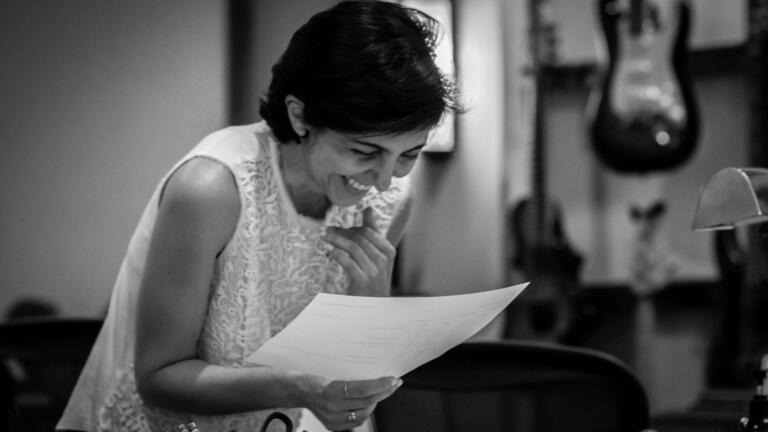
Journey to Rebirth invites listeners to go deeper than passive listening: physical copies include journal prompts, and the live shows offer different levels of immersive experience. She is particularly excited for the September 19th event that will take listeners back to Bandrika Studios, where the album was recorded. “I am very intentional about keeping it smaller in these smaller-sized venues and spaces because of what it takes you through.”
Layla’s next projects include a soon-to-be-released album with Audio Network, but Journey to Rebirth has changed her in a profound way that will continue to influence how she creates moving forward. “This album may be inspired by my own story, but really it speaks… to the warrior in each and every one of us, and the battles that are fought quietly, and and the courage that it takes to to show up, to keep showing up, and so beyond beyond the albums that I’m working on, I have what feels even stronger and more important to me, that is a mission.” Layla will work with The Healing Tree, an organization that provides therapy and resources to individuals without access to these services. “I feel very connected in creating spaces and continuing to create journeys and immersive experiences that bring people in and invite people into these spaces.”