


Disclaimer: This article reflects the personal views and beliefs of the author and does not represent an endorsement or official position of Crossover Music Magazine.
“Music is the universal language” (Henry Wadsworth Longfellow), the great connector, the uniter of humanity. It has a power unlike anything else to give us hope, to comfort our sorrows, and to heighten our moments of joy. Unsurprisingly, music has also been used as a tool to fuel great movements and heighten propaganda. In American history, we can see how music buoyed on patriots during the Revolution, or how themes of home were used to justify rebellion and instill a false sense of justice for the Confederate cause during the Civil War. We see the important role music played during WWII, so much so, in fact, that the false news of Hollywood soprano Deanna Durbin’s death was used to hurt morale. We watched as folk artist and activist Joan Baez, armed simply with a guitar, powerfully proclaimed “We Shall Overcome” on the steps of the Lincoln Memorial during the March on Washington.
These are but a few examples, of course. Verdi’s “Va Pensiero” is seen by some as a rallying cry, while Beethoven’s “Eroica” began as a homage to Napoleon Bonaparte. Why? Because music does not exist in a vacuum. As artists, we are first and foremost humans, products of the environments around us. Whether overtly or simply by chance, we cannot help but be influenced by the world.
“Shut up and sing!” This has been the common criticism hurled at artists who speak up politically, and some have taken this theme to heart. Although Bob Dylan’s music was used as anthems for various causes (“Blowin’ in the Wind”), he famously tried to move away from activism. Others who did speak faced opposition or direct harm to their careers. In the documentary Miss Americana, Taylor Swift is seen struggling with her advisors (including her own father) about the harm speaking out politically would have on her career. Rachel Zegler was pressured to delete a post about standing with Gaza.
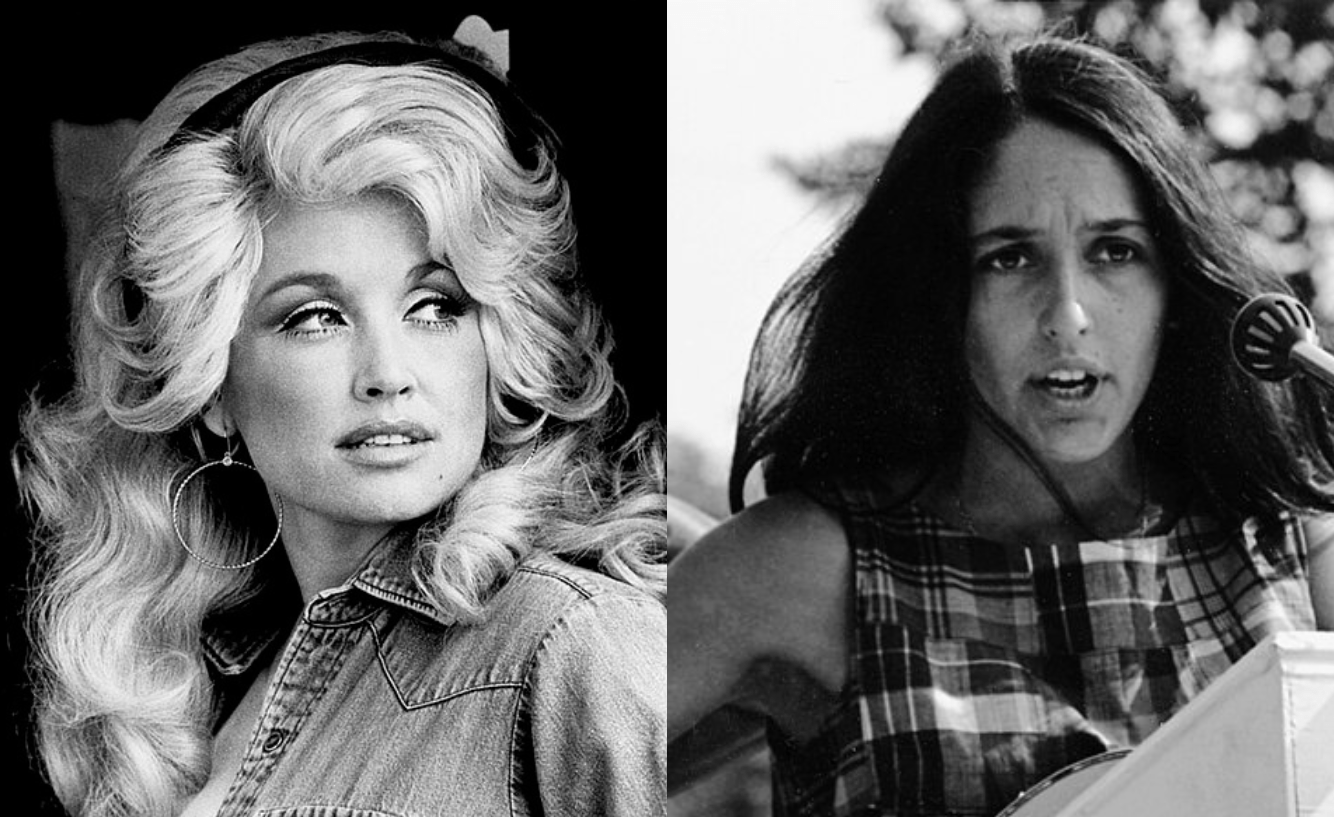
Most striking to me are the examples of two women I have the utmost respect for: Dolly Parton and Joan Baez.
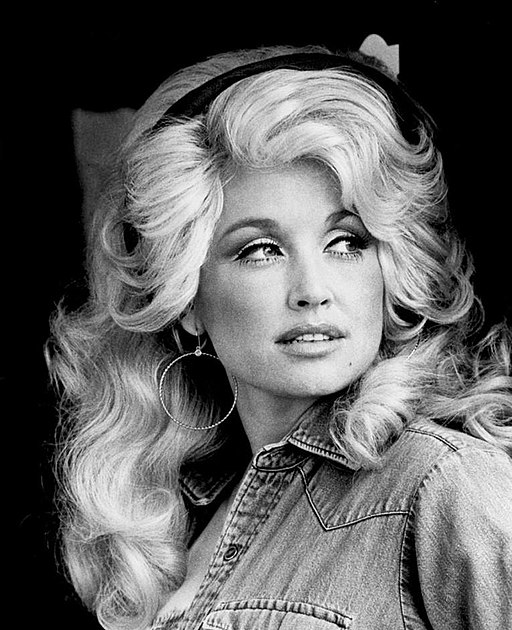
Dolly has stated plainly, “I learned a long time ago to keep your damn mouth shut if you want to stay in show business.” But while she won’t discuss politics, Dolly’s actions for her community and as a philanthropist have made clear her stance is for kindness and tolerance. Hers is the example of someone who uses their time and funds to support the causes they believe in, leaving some supporters to believe they know where she politically aligns, but without inviting conflict or alienating those who love her music.
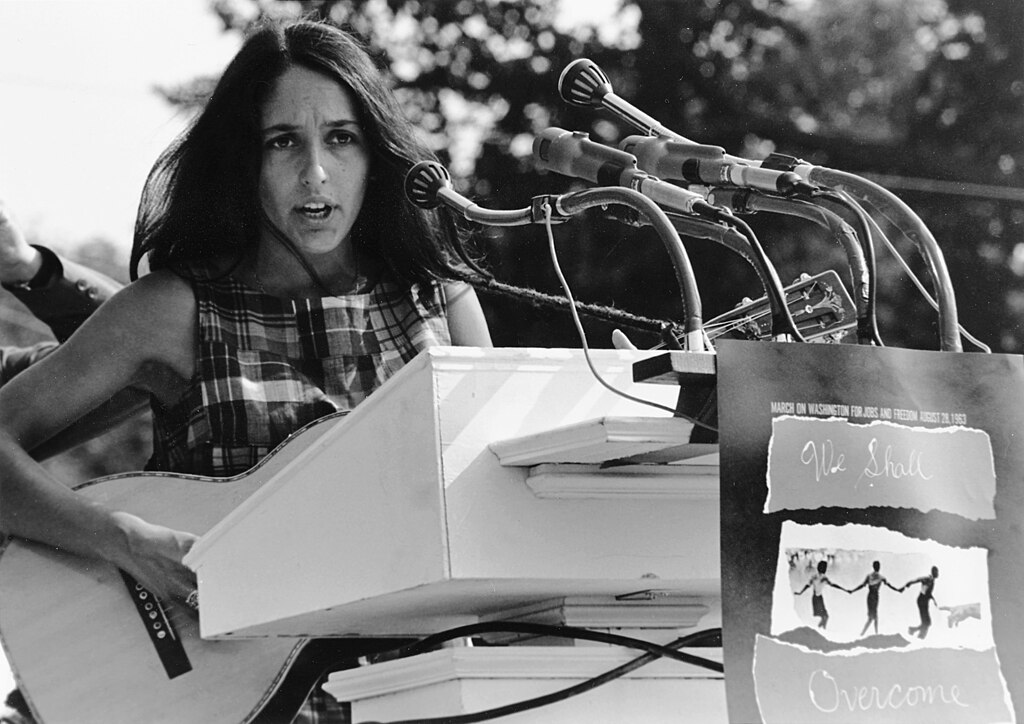
Then there’s Joan; there was nothing ambiguous about her beliefs. Raised as a Quaker, she was a lifelong pacifist, and almost as soon as her star had risen, she began using her platform in a very public way to stand up for what she believed in. Joan refused to perform when there were segregated audiences; she walked alongside Dr. Martin Luther King, and was later jailed for her anti-war activism. She has been quoted various times saying, “If you’re gonna sing meaningful songs, you have to be committed to living a life that backs that up.”
There was a time when I identified more with Dolly’s approach. As a staunchly anti-Christian nationalist Christian believer, I was raised to stay apolitical. Not even to vote. Our work, I was told, was to change hearts, not shake up the ballot box. I remember distinctly having a conversation with a colleague where I shared my confusion as to how artists could post political beliefs on their music pages online. But then the 2024 election happened in America, and I found myself truly changed. I’ve watched with horror how many lives have been destroyed. My heritage is partly Ecuadorian, and my heart is broken for my community, for the utter lack of humanity that I see displayed. It has impacted my mental health. I have struggled between feeling numb and continually jolted by the history that is playing out in front of us. So here’s where the rubber meets the road: do I stay silent, or do I risk speaking up and alienating others?
As a platform, the decision is easy. Crossover Music Magazine is a non-political non-profit, but as an artist and as a human, that’s a very different decision. After she spoke out, Taylor Swift was the subject of a thwarted terrorist attack during her Eras tour. While causation does not equal correlation, we can see the experience changed her. While some demand she speak up now, I believe that’s unfair. Listeners should not feel entitled to demand action from a performer in the same way that they don’t have the right to silence them. The fact is we can’t only think about the awful things in life 24/7, we need distractions, and it’s not wrong for a performer to try to use their platform as that escape. Whether choosing to speak or stay silent, there is a risk of damaging your brand or in extreme cases, risking your life. Making the choice is personal to each person. For me, I’ve realized silence is not an option. My voice may not make much of a difference, but my heart cannot stand by and do nothing.
Recently, Kennedy Center President Richard Grenell proclaimed, “True artists perform for everyone regardless of the political affiliation of audience members.” And while yes, music is available to be consumed by anyone, his statement is simplistic and denies artists’ autonomy. It demands them to perform like show ponies regardless of their personal beliefs. It once again falls into the narrative that there is a right way to use your voice – to entertain but not to speak up. It denies the humanity of the artist, the citizen.
So should musicians be political? The very act of creating music is, in many cases, a defiance in itself. In The Hunger Games novel, one of the underlying story elements for Katniss is her own and other characters’ relationship with music. When learning that fellow tribute Rue loves music more than anything in the world, Katniss is incredulous, saying to herself, “In our world, I rank music somewhere between hair ribbons and rainbows in terms of usefulness.” Yet throughout the trilogy, her relationship with music changes. Rue’s three-note call is later the basis for the murder of innocent protesters, and then, much later, it is Katniss herself who, recalling an old protest song from her father, rallies the rebellion through song. Music, which can seem incidental or entirely essential for life, is innately tied to who we are as human beings – human beings existing in society. Each artist should have the right to act according to their conscience, but whether explicit or accidental, music is political because music is human.
“We must always take sides. Neutrality helps the oppressor, never the victim. Silence encourages the tormentor, never the tormented.”
― Elie Wiesel