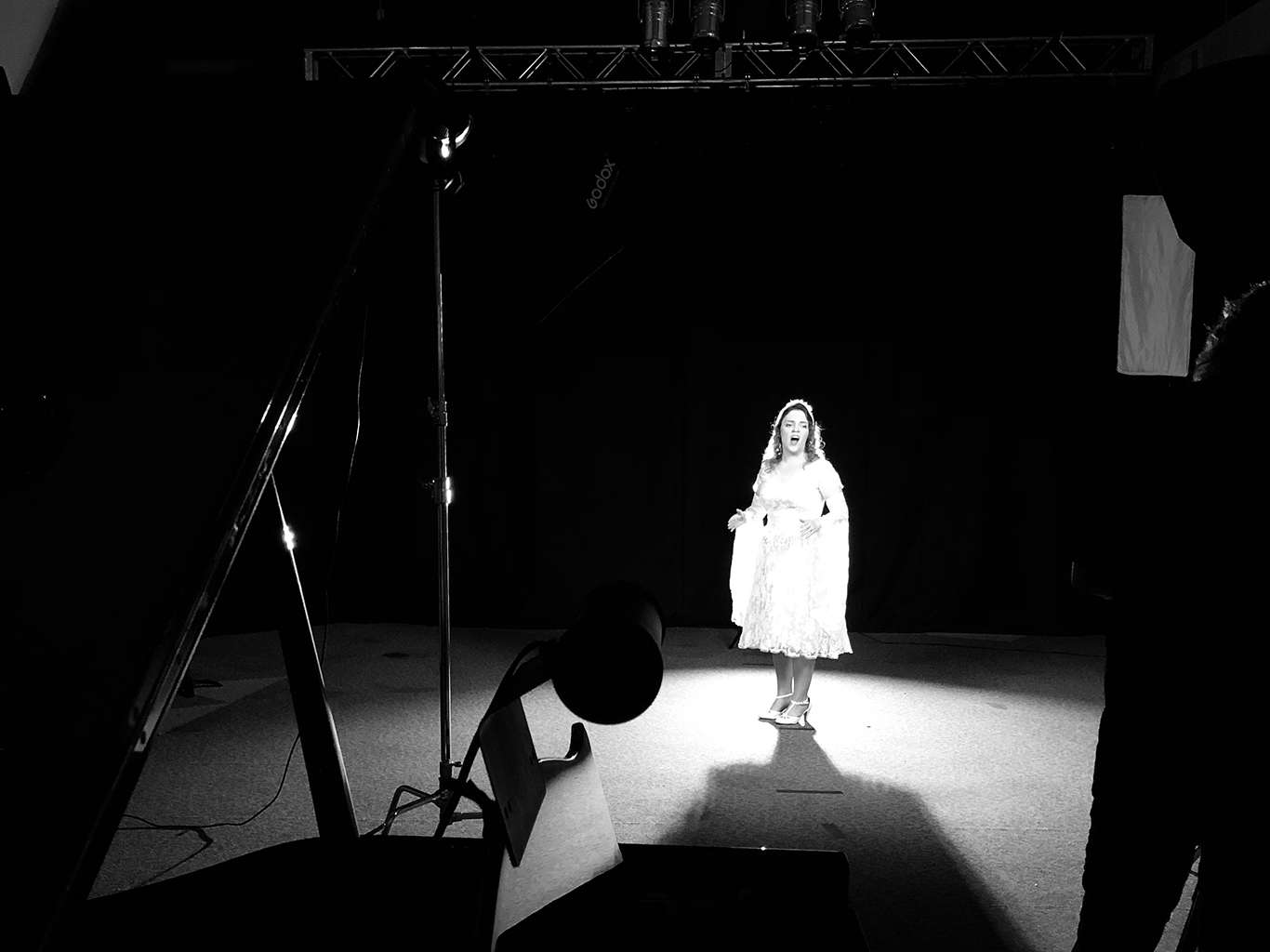


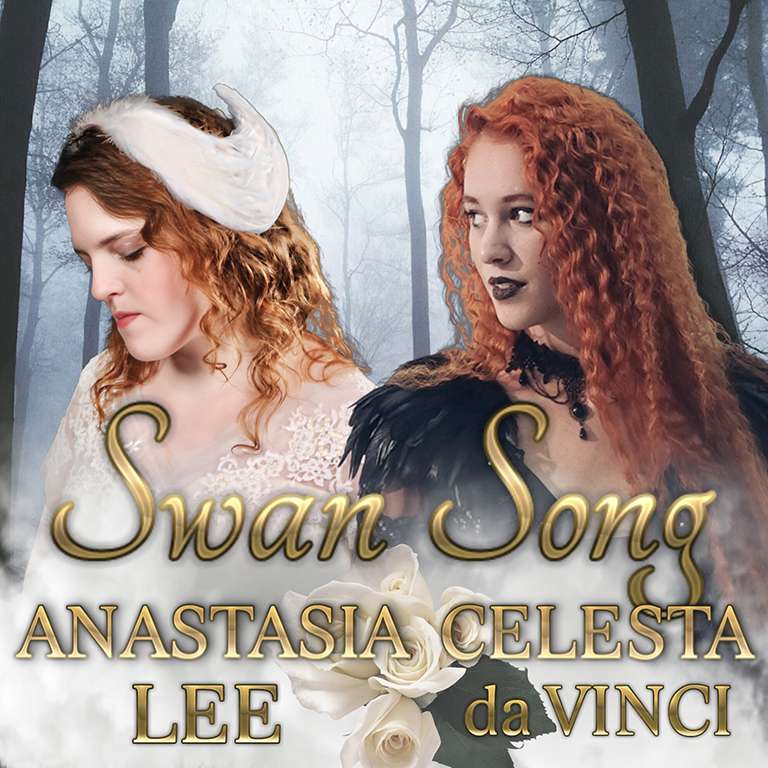
Tchaivosky’s “Swan Lake” ballet has enchanted audiences for many years. Now it’s given a new update in “Swan Song,” a collaboration between Anastasia Lee and Celesta da Vinci. Learn more about this reimagining as we speak to Anastasia.
Crossover Music Magazine (CMM): You have shared that “Swan Song” has taken a few years to complete. Tell us about the original inspiration and how the song has evolved.
Anastasia Lee (AL): First off, thank you for inviting me to interview and introduce my take on Tchaikovsky’s Swan Lake. Like so many little (and older) girls, I was obsessed with ballet growing up. Tchaikovsky, in particular, was my favorite. And like many girls from my generation, I was partly introduced to his music by the Barbie movies like Swan Lake and The Nutcracker. I remember watching every film version of the ballets as well. I’d dance (very badly, but passionately) around my room or the kitchen to the orchestral tracks for hours. It was stress relief, honestly. I am no dancer, though. As a singer, I really wanted a way to personally connect with the music, still, and the way I decided on doing that was by writing my own lyrics to it.
CCM: When mixing a beloved classical piece (Tchaikovsky’s Swan Lake) and modern elements to it, were there any special considerations you had in mind?
AL: My main concern was in trying to do it justice and also making it interesting or unique. Though obviously not a Queen song, I was often subconsciously reminded of Freddie Mercury’s quote, “Do what you want with my music, just don’t make it boring.” I’d argue that Freddie and Pyotr Tchaikovsky had quite a lot in common, among those things being that they were both a part of the queer community and both highly eccentric.
So the main thing I was thinking about was trying to get the lyrics as high quality as possible. Or to a standard I found acceptable. Which is why I rewrote it completely 8 or 9 times over the course of 5 years. The fact that I wrote the lyrics in Italian is also why it took so long. I used library translation books and studied them like a madman, writing and rewriting the lyrics over and over again. I’d be working on the lyrics and singing them as quietly as possible at 3 AM in my apartment, because I’d randomly get the artistic urge to work on it again. I keep odd “artists’ hours” no matter how hard I try to be normal.
I’ve been singing in Italian since I was 8 years old, which helped matters in terms of lyrical arrangement, but I don’t actually have any formal training in just the language. From age 7-24, I’ve had years of on-and-off lessons in Latin, Spanish, Russian, and German. Unsurprisingly, Italian is very similar to Latin. After I had my final arrangement for the lyrics I wrote, I sent them to an Italian native I know, and he double checked everything. To my surprise, no changes needed to be made. If I write lyrics in Italian again, I know I’ll be much more confident and much quicker about it.
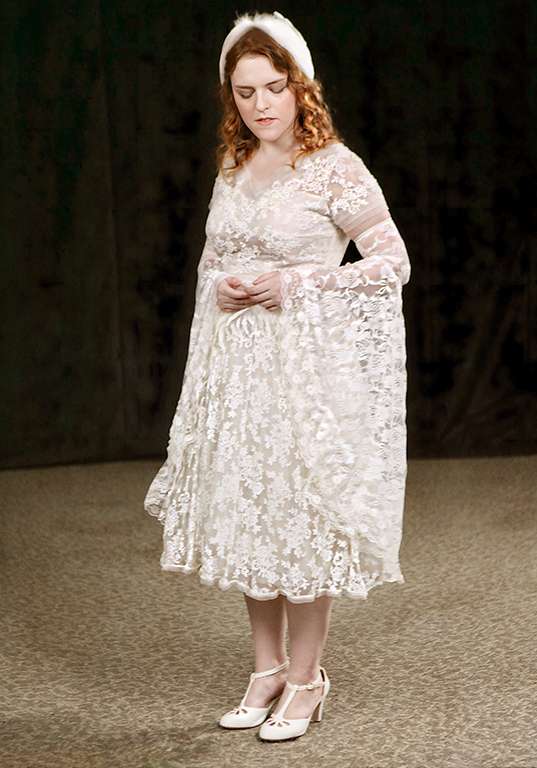
CMM: Do you find that certain instrumental songs lend themselves better to vocal adaptations or is it mainly a matter of arrangement and creativity?
AL: You’re a singer as well, so you know that in vocal music, we depend heavily upon certain arrangements, “intro, verse, chorus, repeat.” And many classical (and other) instrumental pieces can sometimes lend themselves well to that set-up right from the get-go. Tchaikovsky’s music tends to do this well. As a matter of fact, Walt Disney’s famous “Once Upon a Dream” is simply English lyrics added to Tchaikovsky’s Sleeping Beauty.
But I also think it’s a matter of creativity and arrangement. Or rearrangement, if you will. Taking an old tune, possibly a recognizable tune, and revamping it for a modern audience. Elvis Presley and his team were well known for doing this. Here are four in particular. His song Can’t Help Falling in Love? Pulled directly from the 19th-century French love song, Plaisir d’amour. Love Me Tender? Just a new arrangement of the US Civil War era classic Aura Lee. Surrender? A snazzy English iteration of Torna a Surriento. Stay Away? The 16th-century Tudor classic, Greensleeves. All four songs are very well done; I’m particularly fond of Stay Away, but the first two are now world-famous classics.
I think any song or musical movement can be rearranged or given modern elements like lyrics, simply depending on a person’s level of creativity and determination. I actually have several other ideas in mind for other lyrical renditions, with music from Tchaikovsky to Handel and others. If any other singers are looking for ideas or inspiration in that regard, message me because I can point you in the right direction. I don’t mind sharing.
Part of working in music, or even just being human, is accepting your limits. One piece of music I absolutely love is Tchaikovsky’s 1812 Overture, Op. 49. Unfortunately, I do not possess the skill to set lyrics to it. That is beyond me. Though I know there has to be someone out there who could take parts of the tune and redo it in a fashion well-suited for vocals. To that person, whoever you are, I beg you to do it or at least try. Because I’m extremely interested.
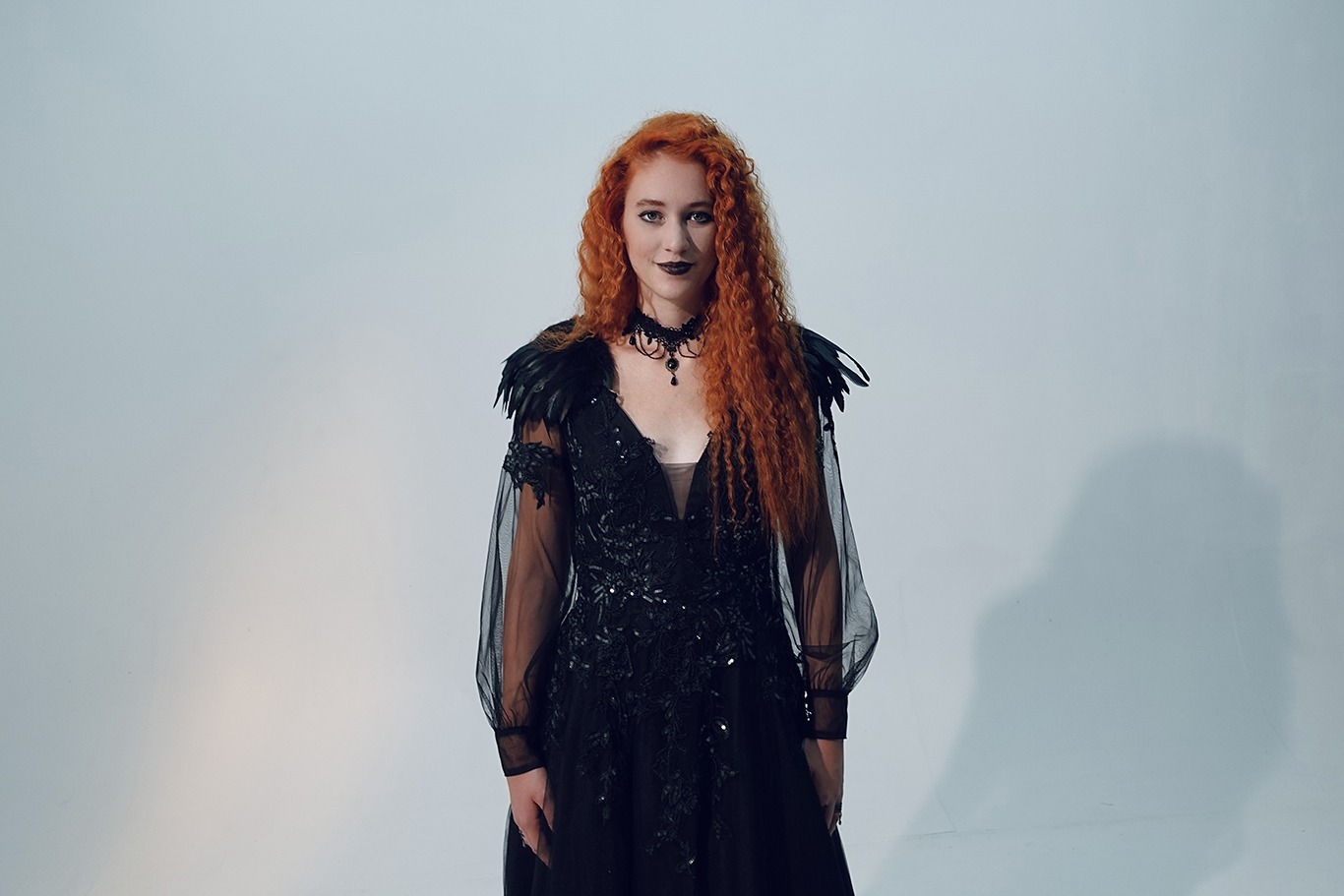
CMM: You collaborate on this track with Celesta de Vinci. What are some of the reasons you were drawn to collaborating with her?
AL: We actually have recorded together before, and she came to the US, and we performed together in 2019, right before COVID hit and shut everything down. This suspended other projects and concerts we were working on together, but we have kept working on Swan Song throughout it.
Onstage, we make a comical duo, honestly, between our stage presence and our huge height difference. (I’m 5’1” on a good day and she’s about 5’10”.) I wanted to record this with her as she has a quality, warm soprano voice (I’m just preferential to warmer or rounder voices).
We also just got along very well together. Also important is the fact that her Dutch sense of humor and my Wisconsin, USA sense of humor meshed well. Probably 5 or 6 years ago, she suggested starting a chat group for fellow young singers in our genre, and so we did that as well. It’s a pretty positive group. The great (unfortunately now late) Patricia Janeckova was in it as well, and overall, everyone is supportive of each other. But as a whole, because of the COVID pandemic, everyone’s projects and ideas have either slowed down or just completely discontinued. COVID honestly wreaked havoc on our industry, even in terms of festivals we’d perform at, and the industry hasn’t recovered. I’m quite disappointed by that. I’m even disappointed in the lack of projects being created, because I enjoyed watching everyone else work and grow as much as I myself enjoy the same.
CMM: You’ve been releasing music since you were a young girl. What are some of the ways your voice or artistry has changed that you are excited to showcase?
AL: I’ve gotten much more confident over the years. I used to be quite bashful and shy, but that’s well passed. I’ve experienced a lot of pain, and I’ve gained a lot of confidence in it. I suppose Marcus Aurelius would approve.
The other notable thing is that people who’ve heard me sing since childhood know that, as a youngster, from age 13-20-ish, I was a soprano. I had a very high voice. That is gone. I’m now a contralto. My voice started dropping around age 20, and I’m now 28 and it seems to be quite settled. I gained a huge lower range, and my former high soprano range essentially evaporated.
I was sending the recording out for feedback, and one of the listeners, who just happens to be the mom of a famous former child soprano, also in our genre, said, “I was surprised you recorded the low part”. That made me laugh, because to be honest, I had to. I also reworked the tune or set it up in such a way that showcases both Celesta’s high range and my low range. Our voices work together well. Actually, I think my best recordings (at least to me) have always been duets or group pieces, because I enjoy a good blend or balance of high and low or airy and deep to a song.
NOTE: I do know that classical purists may greatly dislike what I’ve done in setting lyrics to Tchaikovsky’s Swan Lake. That is absolutely alright by me. Not everything is meant for everyone. I don’t mind negative feedback, and I’m well aware that it’s a possibility. But to my delight, so far all the Russians I’ve sent my recording to love what I’ve done, and I take that as a very high compliment, seeing as Tchaikovsky is a Russian national hero.